As the pelvis rotates forward on the side of the swing limb, muscles and other soft tissues that cross the hip joint cause the entire swing limb to rotate internally (or medially) with respect to the body's line of progress.
It's as if the rotating pelvis imparts a "spin" on the limb, much as you might impart a spin to a ball by turning your wrist as you release it from your hand.
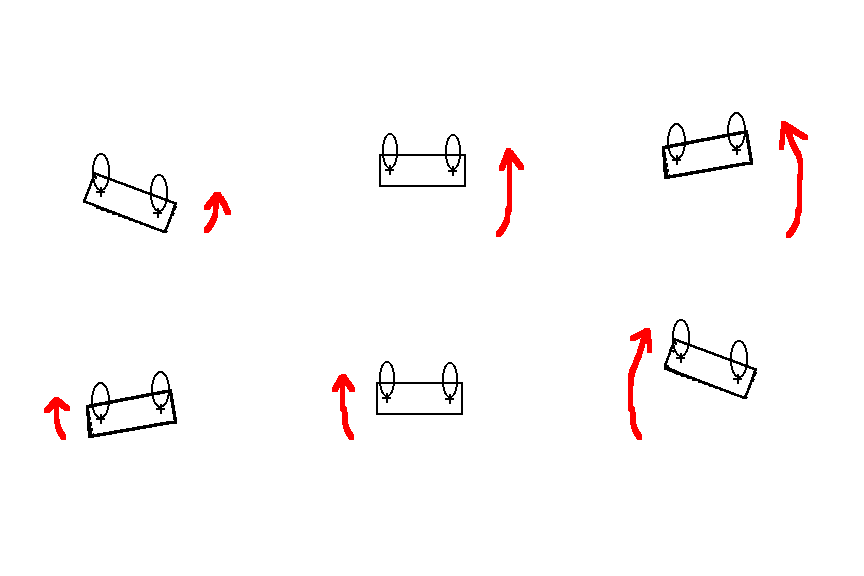
Reload this page to see animated pelvic movement in the transverse plane.
Even though soft tissues transmit the pelvis' direction of rotation to the entire lower extremity, the hip joint (where the acetabulum contacts the femoral head) is nevertheless externally rotating during swing; otherwise, the toes would point medially at the end of swing.
The swing limb's internal rotation continues even after it touches the floor. During loading response, as the body's weight gradually moves onto the limb, the tibia continues to rotate internally with respect to the femur.