As the pelvis rotates backward (relatively) during stance, muscles and other soft tissues that cross the hip joint cause the entire stance extremity to rotate externally (or laterally) with respect to the body's line of progress. Pelvic rotation imparts this external rotation to the stance lower extremity once body weight is loaded onto the stance limb, that is, during midstance and terminal stance.
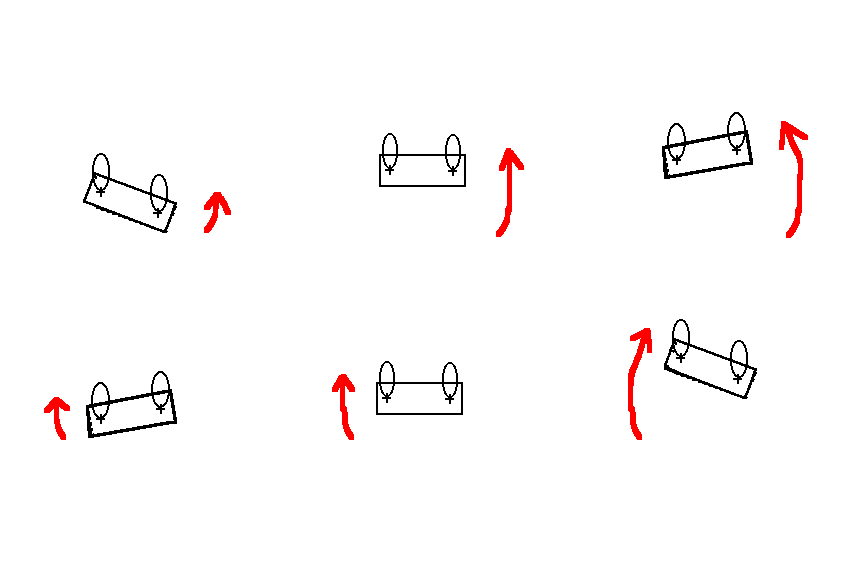
Reload this page to see animated pelvic movement in the transverse plane.
Because the body's weight stabilizes the foot on the floor, the hip joint rotates internally as the superincumbent pelvis moves on the relatively stable femur. Even so, soft tissues transmit the pelvis' direction of rotation to the entire lower extremity, so that the entire stance limb undergoes an external (or lateral) rotation during midstance and terminal stance. You can reproduce the pelvis' effects on lower extremity alignment and movement by rotating the pelvis as you stand with weight on both limbs.