Case No.: L-004
Diagnosis: Microcystic serous cystadenoma
Organ: Pancreas
Last Updated: 12/21/2011
|
|
|
Hematoxylin & eosin |
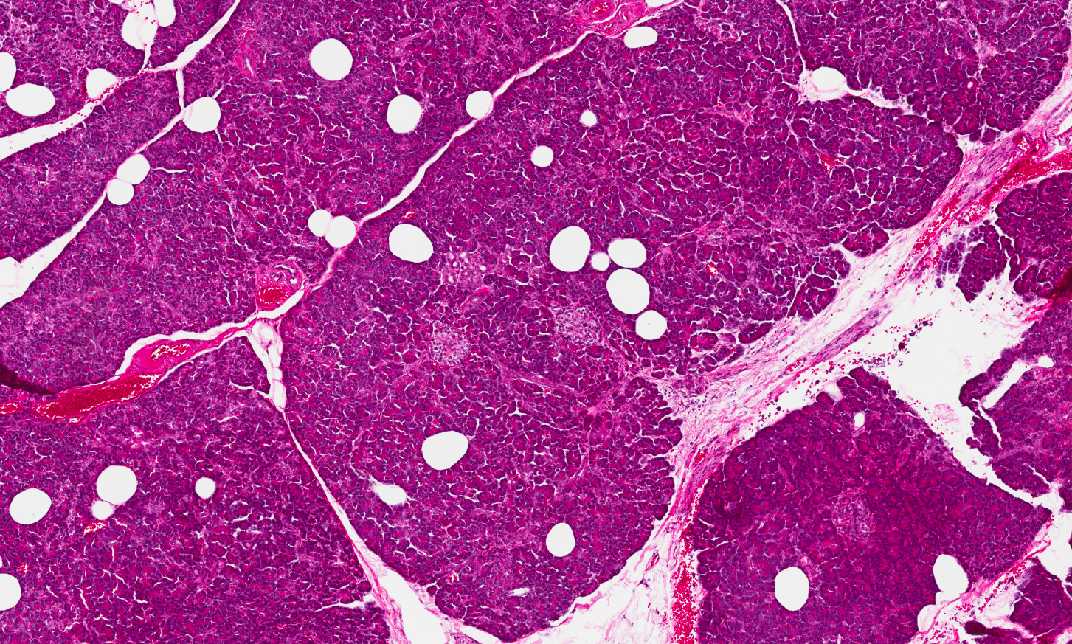
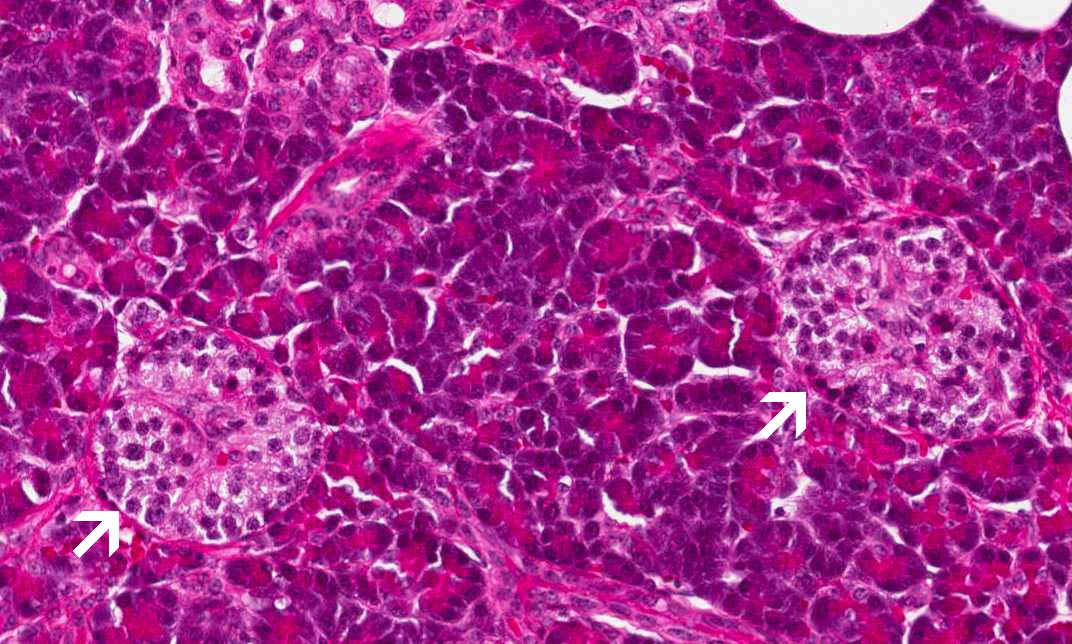
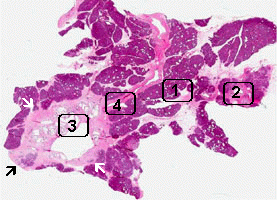
Area 1: Both exocrine and endocrine components are illustrated here. The islets of Langerhans are outlined by the arrows. |
|
Hematoxylin & eosin |
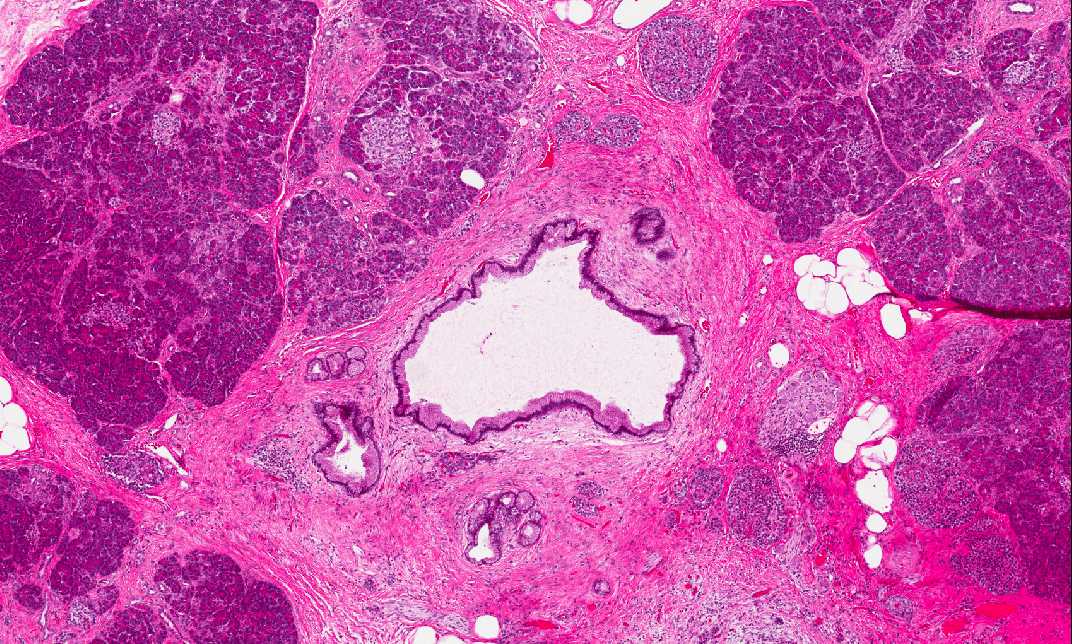
Area 2: The glandular components are being illustrated here. |
|
Hematoxylin & eosin |
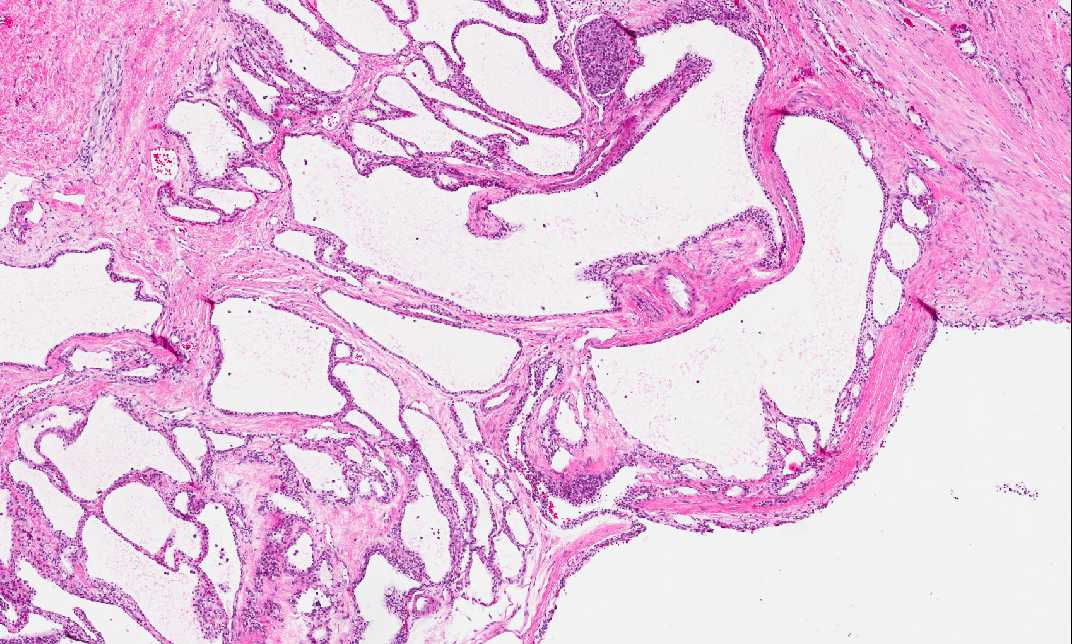
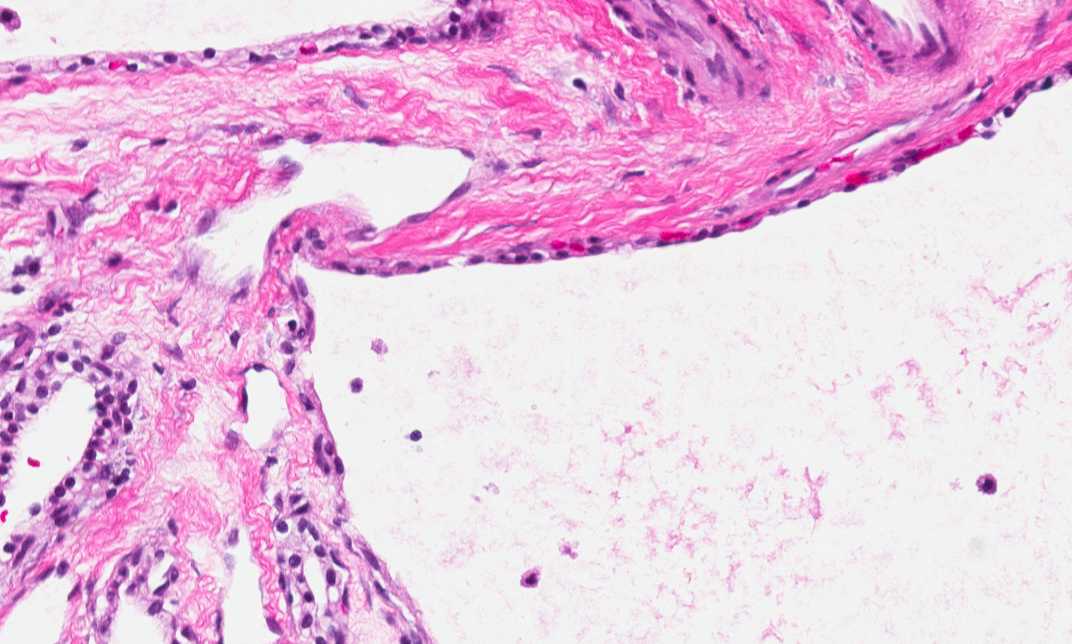
Area 3: The tumor is composed of numerous cysts of variable size separated by fibrous septa of variable thickness lined by a single layer of cuboidal clear cells with bland nuclei. Entrapped islets may be seen within the septa but they are not present in this case. In some areas, the lining seems to have more than one layer and most of these areas are due to tangential cut of the cysts. |
|
Hematoxylin & eosin |
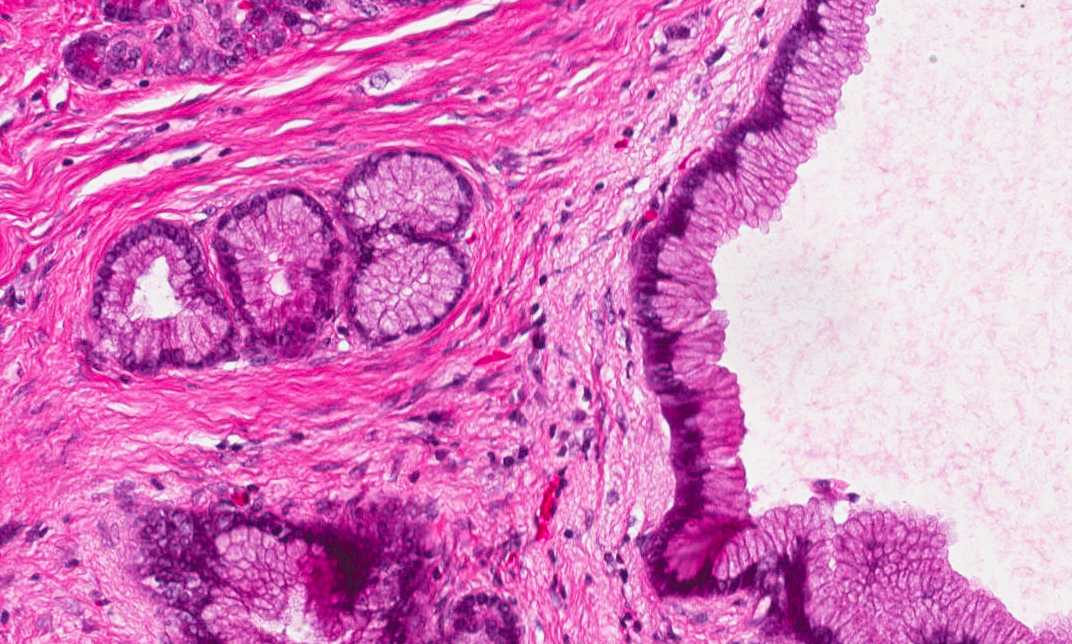
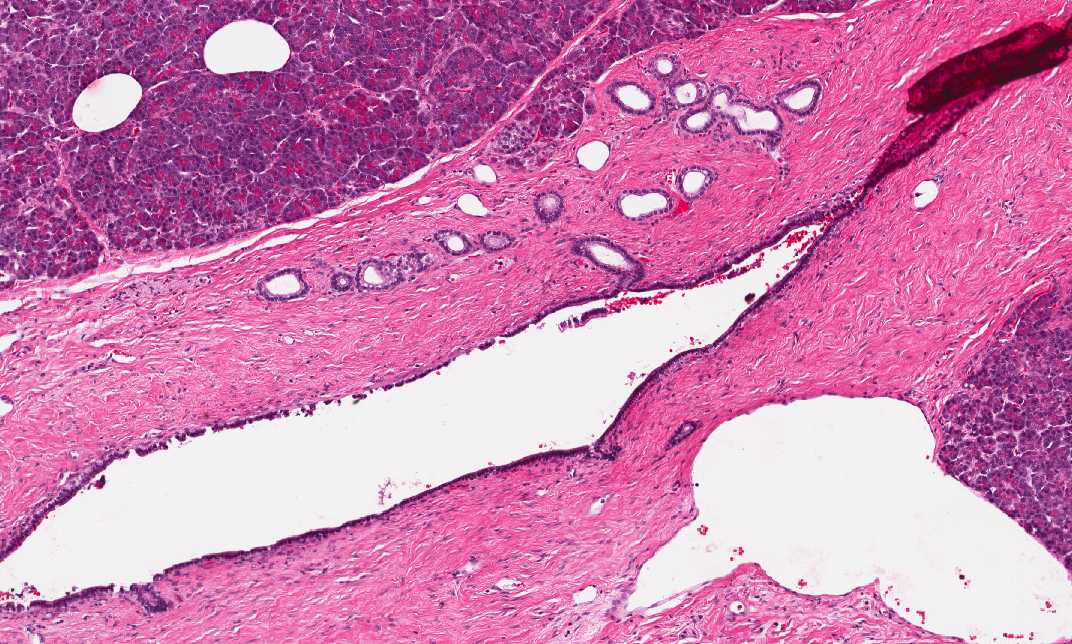
Area 4: In this area, there are some atrophic changes of the ductal epithelium. The atrophic chagnes may be secondary to obstruction produced by the tumor. |
|
History: This specimen was obtained from a 65 year old patient. What is this organ? What is your diagnosis?
Histologic Highlights of this Case:
Comment:
|
Original slide is contributed by Dr. Kar-Ming Fung, University of Oklahoma Health Science Center, Oklahoma, U.S.A.