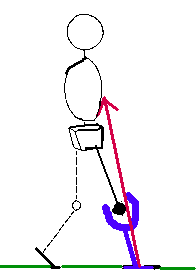
Typical alignment for below-knee socket
An appropriately short heel lever permits GRF to move anterior of knee joint early in stance phase.
|
| Typical alignment for below-knee socketAn appropriately short heel lever permits GRF to move anterior of knee joint early in stance phase. |
|---|
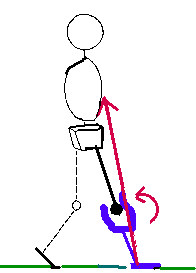
| In this position, the GRF places an extension moment on the socket-RL interface, and causes the socket to "rotate" on the RL in a direction that concentrates pressure:
|
|---|
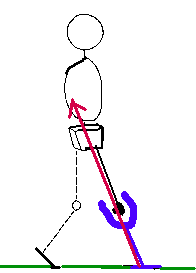
| If the prosthesis' heel lever is too long, the GRF is also located more posteriorly. |
|---|
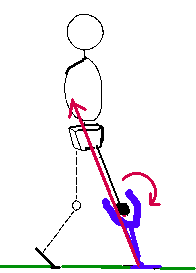
| In this position, the GRF places a flexion moment on the socket-RL interface, and causes the socket to "rotate" on the RL in a direction that concentrates pressure:
|
|---|
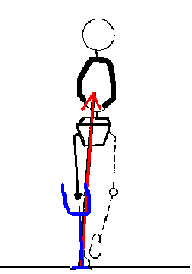
| Typical alignment for below-knee socketBy "insetting" the foot, the prosthetist causes the GRF to be located medial to the interface between the RL and the socket. |
|---|
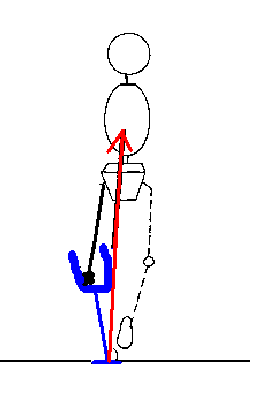
| In this position, the GRF places a varus moment on the socket-RL interface, and causes the socket to "rotate" on the RL in a direction that concentrates pressure:
|
|---|
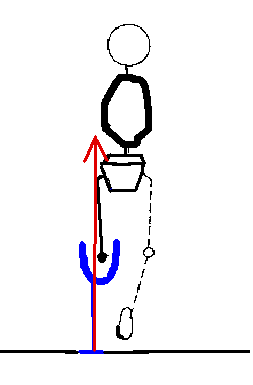
| If the prosthetic foot is "outset" or aligned more laterally, the GRF is also located more laterally during midstance. |
|---|
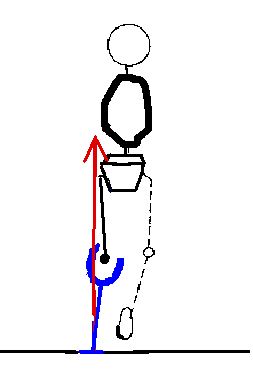
| In this position, the GRF places a valgus moment on the socket-RL interface, and causes the socket to "rotate" on the RL in a direction that concentrates pressure:
|
|---|