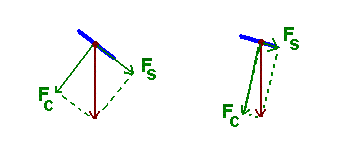
Squat lift strategies: Effects on compressive and shear forces at L5-S1

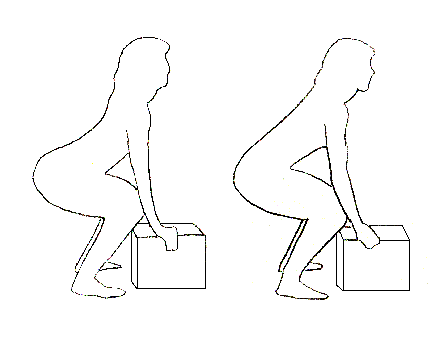
Two styles of squat lifting:
  1. lordotic, pictured on the left, is characterized by a relative anterior pelvic tilt and increased lordosis

  2. flat-backed, pictured on the right, and characterized by a reltive posterior pelvic tilt and decreased lordosis
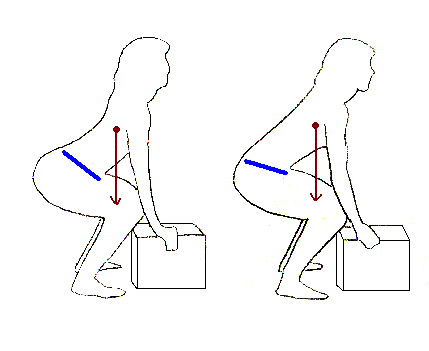
Blue lines illustrate the L5-S1 joint surface's orientation in the two pelvic postures.

Maroon vectors represent gravity's force on the body (but not the additional weight that the person is lifting) that is superincumbent to the L5-S1 intervertebral joint.

Below, gravity's effect on the joint surface is compared through resolution of the force's vector into compression (Fc) and shear (Fs) component vectors.

When the pelvis is tilted more anteriorly (left figure), gravity's force produces less compression and more shear force than when the pelvis is tilted more posteriorly (right figure).

The vector construction illustrates a "trade-off" that therapists accept when they teach a person to use either of the two strategies for the squat lift.


Last updated 10-30-00 Dave Thompson PT
return to PHTH/OCTH 7143 lecture schedule